A commercial cleaning checklist should make expectations clear without becoming a generic list that ignores how the site works. The best scope identifies priority areas, describes the required outcome and separates routine tasks from periodic detail work.
Use the checklist below as a planning guide, then adjust it for your workplace size, operating hours, surfaces, access rules and level of foot traffic.
Reception, entries and customer-facing areas
These spaces shape the first impression of a workplace. They may require more frequent floor care and glass attention than areas used only by staff. Include the surfaces that visitors notice as they arrive and wait.
- Vacuum or mop entrance floors and traffic paths
- Remove visible marks from agreed entry glass and doors
- Dust and wipe reception counters and accessible furniture
- Empty bins and reset the waiting area
- Check corners, mats and edges for tracked-in debris
Workstations, meeting rooms and shared spaces
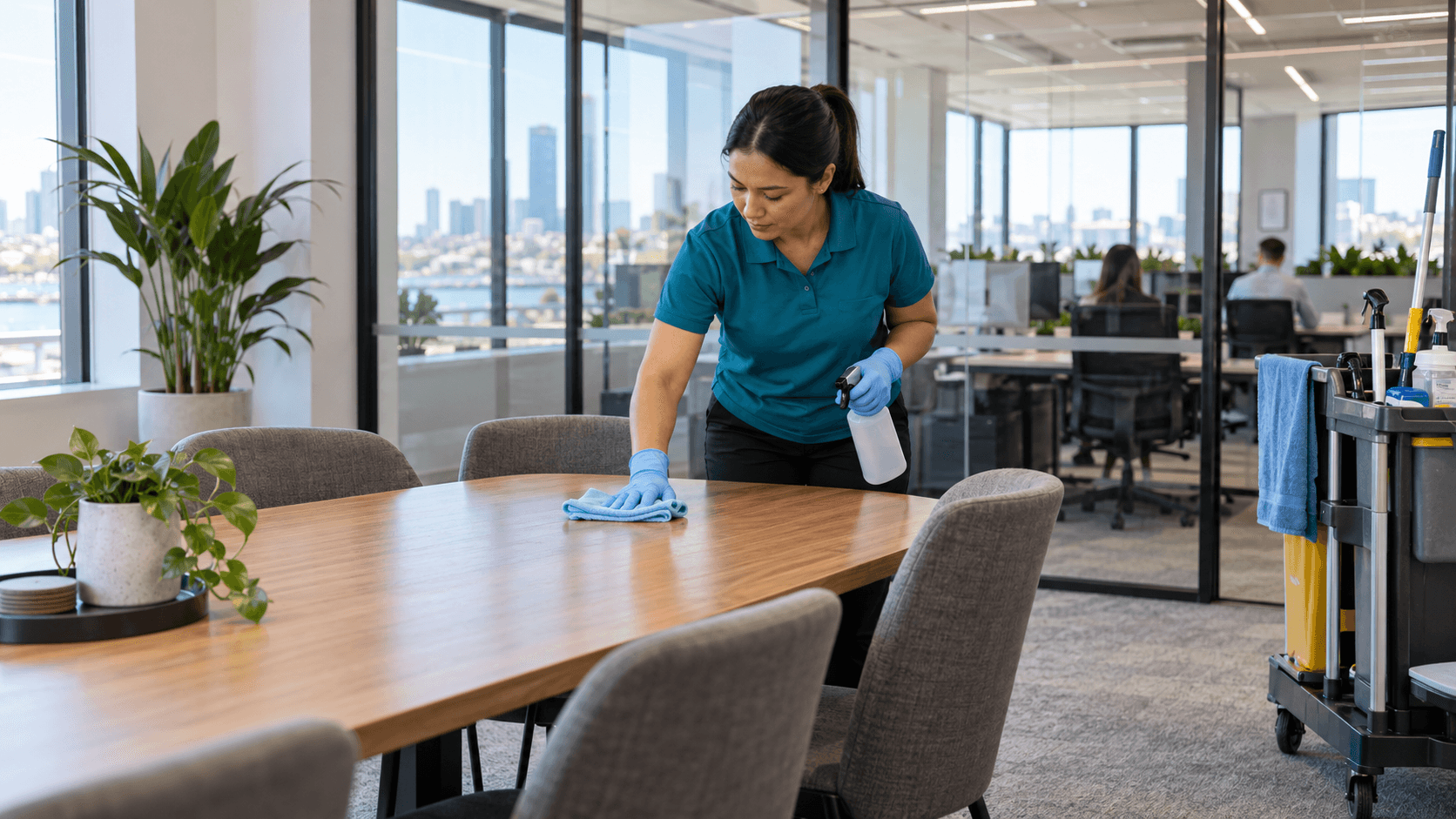
Clarify whether desks should be cleaned only when clear and which equipment must not be moved. This protects personal items and confidential material while allowing the cleaning team to work consistently.
Meeting rooms often need a quick reset as well as cleaning, particularly when they host clients or turn over several times a day.
- Dust accessible horizontal surfaces
- Wipe agreed shared tables and touchpoints
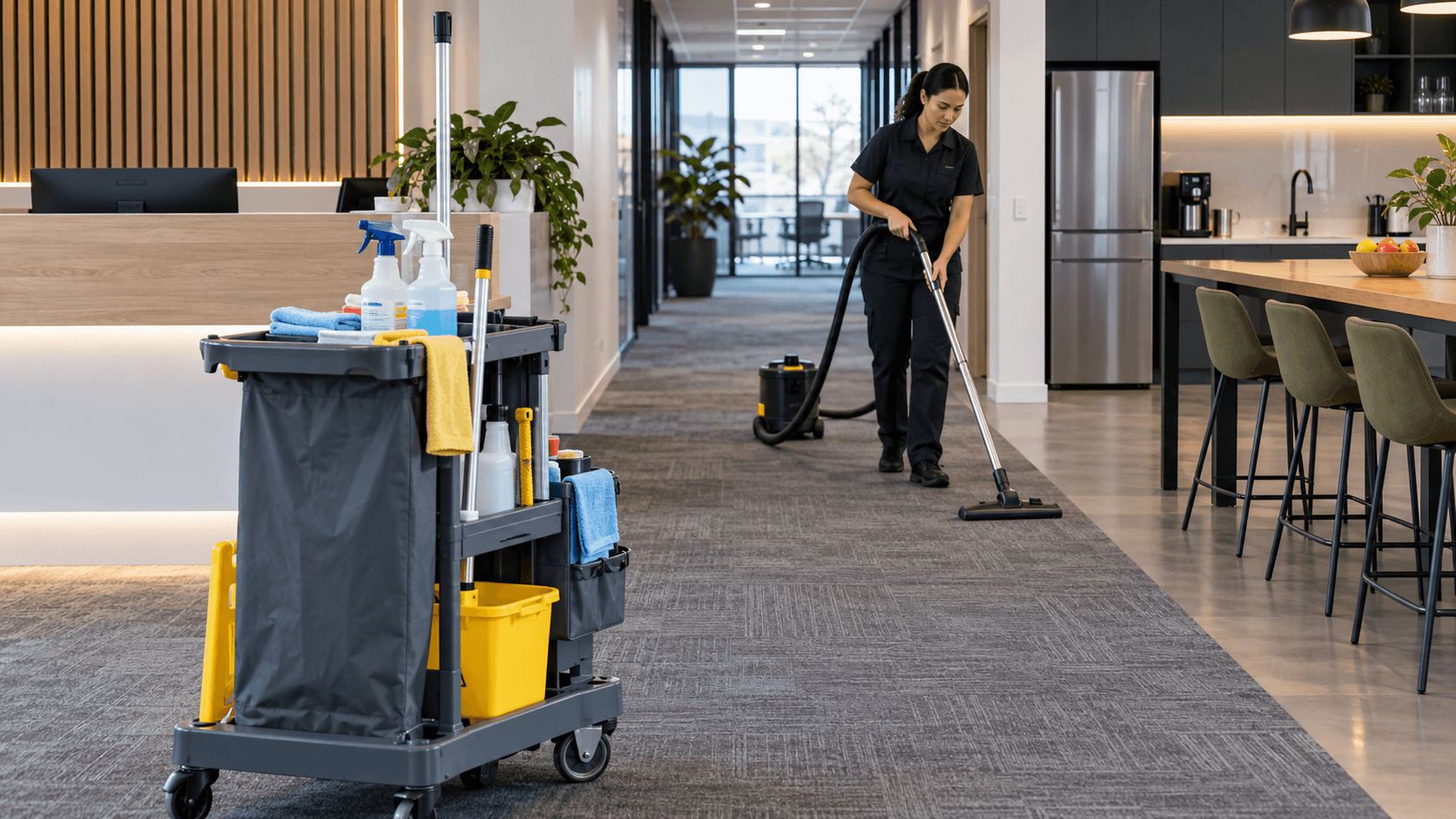
- Vacuum floors and spot-clean obvious marks where appropriate
- Empty bins and return chairs to an orderly position
- Clean whiteboard ledges or presentation areas if included
Staff kitchens and break areas
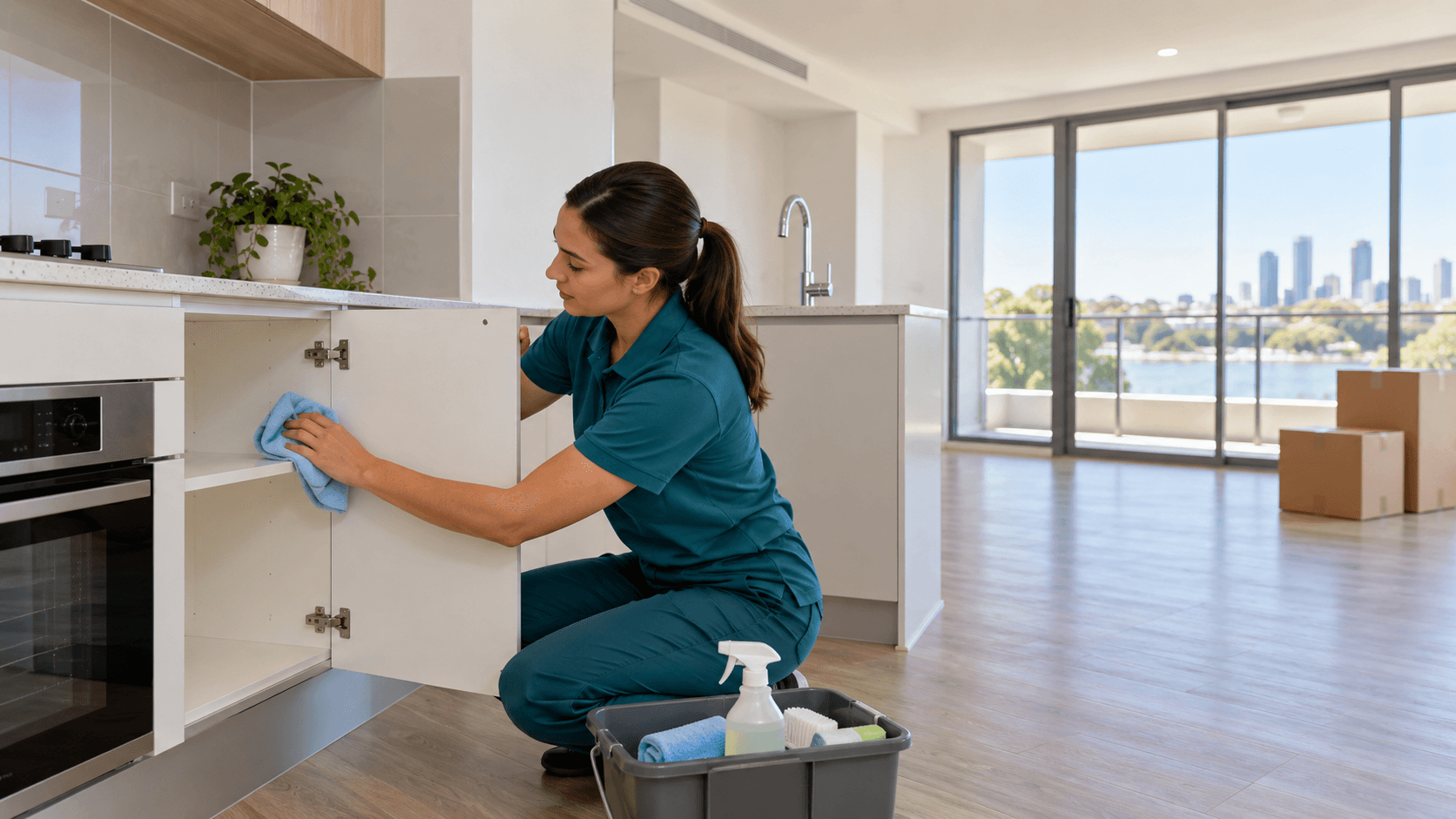
Kitchens need a clearly defined boundary between cleaning and staff responsibilities. A commercial cleaner may handle benches, sinks, cupboard exteriors and floors, while food disposal, dishes and appliance interiors may require a separate agreement.
State whether consumables, dishwashers or refrigerator checks are included rather than assuming they form part of every visit.
- Clean sinks, benches and splashbacks
- Wipe accessible appliance and cupboard exteriors
- Empty bins and address the surrounding floor
- Clean tables and shared seating
- Mop hard floors using a method suitable for the surface
Washrooms and amenities
Washrooms should have a defined routine for fixtures, mirrors, partitions, touchpoints and floors. If the cleaner is responsible for consumable checks, list the products and replenishment process in the scope.
Frequency should reflect occupancy rather than simply matching the rest of the office. Busy amenities may need an additional visit or daytime check.
Floors and scheduled detail tasks
Different floor types need different methods. Identify carpet, resilient flooring, tile, stone and entry mats so the plan can match equipment and products to each surface.
Add a separate rotation for internal glass, skirting boards, high dusting, chair bases, vents and other details that do not need attention on every service. A written rotation makes these less visible tasks easier to track.
Information to include in the final scope
A checklist works best when it is supported by practical site information. Record access windows, alarm or key procedures through a secure channel, restricted areas, delicate surfaces, waste locations and the workplace contact for service questions.
The completed scope should make it easy to confirm what is included, how often it is completed and which tasks require approval or additional time.
Frequently asked questions
Should every task be completed on every commercial cleaning visit?+
Not necessarily. Core presentation and hygiene tasks may be completed frequently, while glass, edges and high dusting can follow an agreed rotation.
Who moves paperwork and personal items from desks?+
Staff should generally clear surfaces before cleaning. The agreed scope should explain what cleaners may move and which areas should be left untouched.
Can the checklist be changed after service begins?+
Yes. The plan should be reviewed when occupancy, operating hours or workplace priorities change.
Need help with your property?